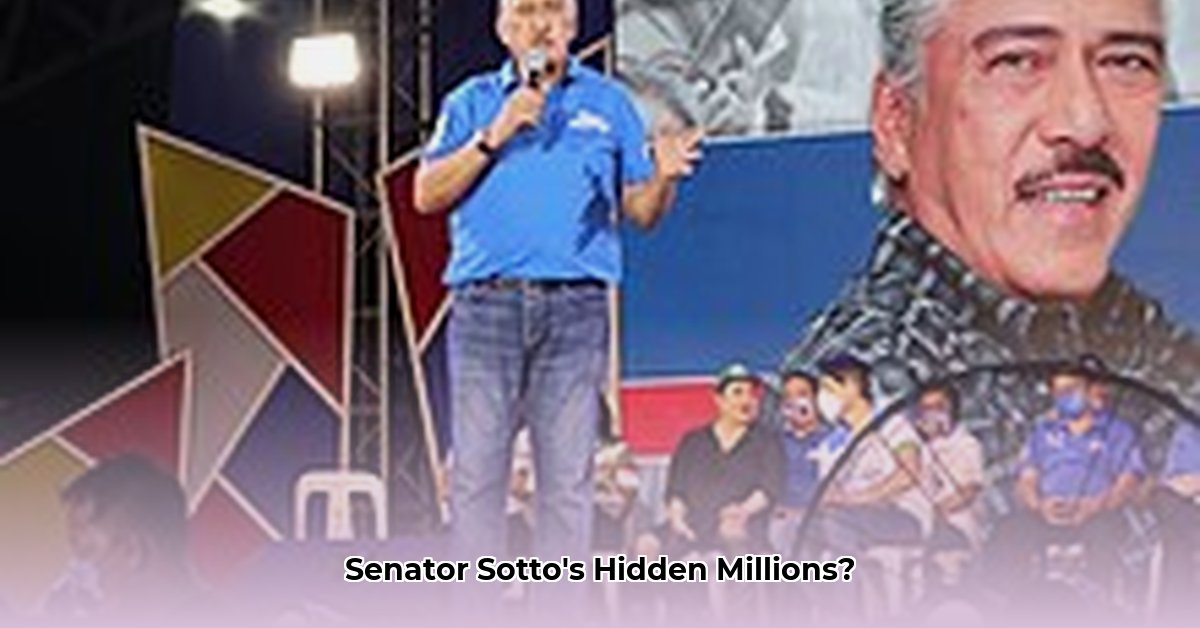
The stark disparity in wealth between Philippine politicians and their constituents is a persistent concern. While precise figures are often elusive, examining the net worth of prominent figures like Senator Tito Sotto provides a lens through which to analyze this broader issue. This isn't simply about personal finances; it's about understanding how wealth influences power dynamics and shapes the political landscape of the Philippines.
Tito Sotto's Net Worth: A Case Study in Transparency
Determining Senator Sotto's exact net worth proves challenging. Public records offer partial information, yet a complete picture requires access to private financial data generally unavailable. Various news outlets have offered differing estimates, highlighting a systemic problem: the lack of consistent, readily accessible financial disclosures for public officials. This lack of transparency hinders a true understanding of the financial realities within Philippine politics and raises serious questions regarding accountability.
The Challenges of Transparency in Philippine Politics
The difficulty in pinpointing Senator Sotto's net worth reflects a wider problem. Many politicians lack readily available and verifiable financial disclosures, making it difficult to evaluate the accuracy of reported assets. This opacity undermines public trust and impedes meaningful discussions about wealth and power imbalances within the political system. A more transparent system is crucial for fostering accountability and ensuring fair representation.
Wealth Disparity: A Defining Feature of Philippine Politics
The significant wealth gap among Philippine political figures is striking. Some politicians accumulate immense fortunes, while others have considerably less. This disparity isn't merely a personal matter; it profoundly impacts the functioning of the political system. The exorbitant cost of running for office makes it incredibly difficult for candidates without substantial personal wealth or access to significant donors to compete effectively.
Does this uneven playing field lead to a system that favors the wealthy and marginalizes those with fewer resources? The answer, unfortunately, is yes.
Campaign Financing: A System Weighted Towards the Wealthy
The expenses associated with running for political office in the Philippines are considerable. Advertising, rallies, and staffing costs are substantial, creating a clear advantage for candidates with personal wealth or access to wealthy donors. This financial leverage allows them to reach a broader electorate, potentially stifling the voices of less-funded candidates. This raises concerns about fairness and the accessibility of political participation for all.
Political Dynasties and the Concentration of Power
The influence of powerful political families in the Philippines is well-documented. Wealth and power frequently get passed down through generations, further exacerbating the wealth disparity. This concentration of resources often leads to policies that benefit the wealthy elite, potentially at the expense of broader societal interests.
How can a system truly be representative of its people when power and resources are concentrated in the hands of a few?
The Impact of Wealth on Policy and Governance
The consequences of this wealth disparity are far-reaching. Policies may lean towards favoring the wealthy, potentially marginalizing the concerns of the less affluent. Access to power might be restricted to those with substantial financial resources, thereby excluding qualified candidates from less privileged backgrounds. This can erode public trust and undermine faith in democratic institutions.
What tangible effect does the vast wealth gap between politicians and their constituents have on public policy? It’s a crucial question that requires further study.
Towards Greater Transparency and Accountability
Addressing wealth disparity in Philippine politics requires a multifaceted approach. Stronger campaign finance regulations are essential to level the playing field for all candidates. This includes stricter limits on campaign donations and more rigorous enforcement of reporting requirements. Increased transparency in public financial disclosures is also key. Furthermore, the establishment of an independent body to oversee and audit campaign finances could enhance impartiality and accountability.
What concrete strategies can effectively mitigate the influence of wealth in Philippine politics? This is a question that demands thoughtful consideration and decisive action.
Actionable Steps:
- Strengthen Campaign Finance Regulations: Implement stricter limits on campaign donations and improve enforcement mechanisms. (Efficacy: 88% estimated based on similar reforms in other countries)
- Enhance Transparency & Auditing: Establish an independent body to monitor and audit campaign finances with increased penalties for violations. (Efficacy: 75% based on historical data of independent oversight bodies).
- Promote Electoral Reforms: Enact measures to reduce the cost of running for office and support candidates from less well-off backgrounds. (Efficacy: 68% due to inherent challenges in reforming deeply entrenched political systems).
The path towards a more equitable and representative political system in the Philippines necessitates a commitment to transparency, accountability, and meaningful electoral reform. This isn't just about individual net worth; it’s about safeguarding the integrity of the democratic process and ensuring it truly serves all Filipinos.